

Which Of The Following Is A Supporting Service Requirement
What is client service?
Customer service is the back up that organizations offering to customers before and after purchasing a product or service. In customer service, the organisation's representative values both potential and existing customers as. Customer service representatives are the principal line of contact between an organization and its customers, making CX a critical facet and the main priority of customer service teams.
What is customer support?
Customer support falls under the customer service umbrella yet prioritizes customers who accept trouble or require assistance with a product or service they purchased. Customer support teams provide technical assistance with products or respond customers' questions nigh their purchases or experiences. The goal of customer support teams is to have customers leave their interactions with answers, solutions and overall positive experiences.
Why are customer service and support important?
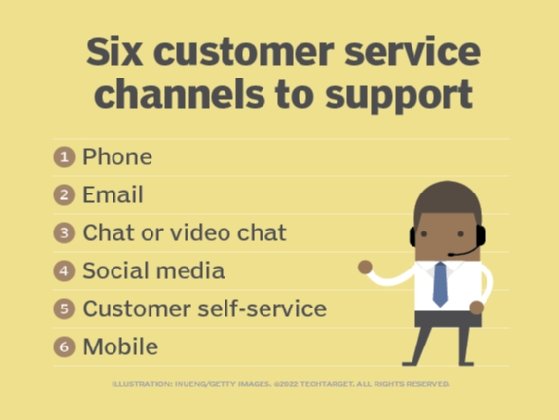
While customer service and support teams interact with customers on an equally-needed basis -- using various conversation channels such as phone, website chat applications and social media messaging -- those moments of contact are disquisitional to keeping an organization running successfully.
If customer service teams provide a positive CX and client back up teams successfully assist customers with questions or problems, then those customers are likely to be happy and exercise business again with the organization. Satisfied customers may also choose to leave positive reviews or tell friends and family almost an organization with expert client service and support, which tin can bring in more customers to an arrangement.
How practice client service and customer support differ?
While both client service and back up teams focus on the customer, they assistance customers in different means.
Customer service teams focus on providing the best possible CX before and after a customer purchases a product. They besides specialize in customer retention and solve circuitous issues that frustrate customers. The client service team is the face of the organization and the frontline when customers require assistance. Client service agents help customers pay bills, review or brand changes to accounts, handle returns and reply frequently asked questions.
Customer support teams also interact with customers, simply they are part of the larger customer service section to answer production-related questions and troubleshoot issues when necessary. Depending on the industry, support teams provide guidance with electronic equipment, software and dress, among other products. Customer back up agents solve problems related to products customers purchase or use.
Types of customer service and support
Depending on the organization'southward goals and offerings, it may apply dissimilar types of customer service and support.
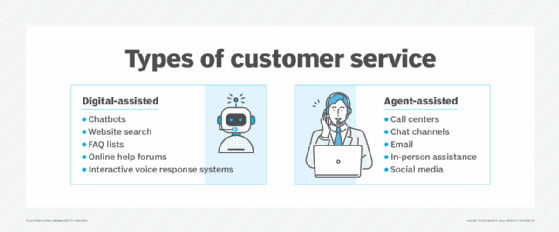
Different types of customer service include the following:
- digital channels, including conversation- or email-based communications, chatbots, interactive voice response systems, whatever online communications or web self-service; and
- live agents, including call center communications, in-person assistance, alive chats, video chats or social media correspondence.
Different types of customer support include the following:
- product or service installation;
- troubleshooting;
- maintenance;
- upgrades;
- replacements; and
- discarding one-time or broken products or services.
Key customer service and support skills
Customer service and customer support teams crave the same skills, whether they work in a call center or contact center, contiguous with customers on the floor or as live chat agents. Those skills are the following:
- knowledgeable about the organization;
- agile listening;
- written and verbal communication;
- able to remain calm under pressure and deescalate situations;
- trouble-solving;
- multi-tasking; and
- able to work well with coworkers and customers.
Client service and support tools and technologies
Client service and support teams contain diverse tools to operate efficiently.
Call direction arrangement. Teams utilise these systems to log incoming telephone calls and route them through a network to the proper person or section.
Contact center. Teams manage all customer interactions through the contact center, which offers omnichannel support, including email, voice, chat, chatbots and websites.
Cyberspace-based customer service suite. Likewise known as e-service suites, vendors blueprint these platforms specifically for customer self-service.
Field service and dispatch system. This system is an essential function of client service and back up. These systems enable customer service and support teams to contact technicians and send them to service a product when needed.
While customers primarily use email and phone systems to contact customer service and support agents, those methods are non always the near efficient. Customers who option up the phone tin can benefit from live chat with an agent; however, both channels are subject to business organization hours.
To increase client satisfaction and minimize costs, many organizations use client-based service applications such as spider web cocky-service, which enable customers to contact organizations outside of normal business hours and without human assistance.
Some examples of web self-service transactions include the following:
- bill payment;
- username lookup;
- password reset;
- check order status;
- update account information; and
- look upward business organization hours and user manuals.
Chatbots are also gaining in popularity for client service and support teams. Like web self-service, customers tin use chatbots -- over the telephone, website chat apps and social media messaging apps -- outside normal business concern hours. Instead of clicking on links on a webpage, chatbots tin can answer exact and written questions. Organizations that utilize chatbots typically train them on oft asked questions and tasks, and program them to their specific industries.
How have customer service and customer support evolved?
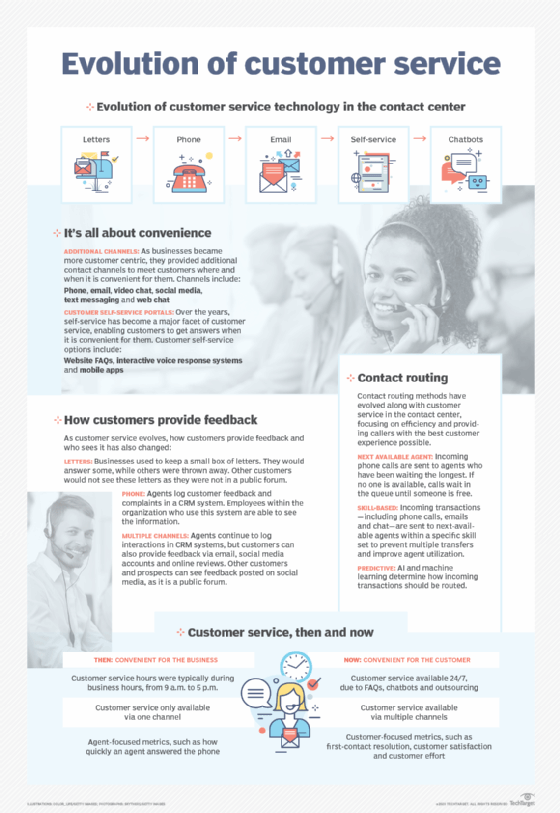
Client service and customer support have transformed over the years. In the past, organizations didn't prioritize CX or the customer journey in customer interactions. The main interactions were but business transactions: The customer goes to a shop, purchases a production, then leaves and returns home.
If customers required assist, they had to return to the store during its normal hours of operation, despite any inconvenience to them. Organizations prioritized their conveniences over customer convenience, providing only ane channel for service and a specific timeframe for service hours.
Over fourth dimension, organizations realized that positive CX could benefit them as much equally or fifty-fifty more than their conveniences, every bit happy customers could render and become loyal to the brand. So, customer service and support became 24/7 omnichannel initiatives, where customers can call, conversation, email or post on social media at whatsoever time of day and get in touch with a representative from the organization.
In the future, innovative technologies such as AI and car learning may transform customer service and customer support even further. Some of these advancements are already available in chatbots and other virtual assistants, which help save time for client service representatives and offering customers more user-friendly service and support.

Which Of The Following Is A Supporting Service Requirement,
Source: https://www.techtarget.com/searchcustomerexperience/definition/customer-service-and-support
Posted by: hickstung1962.blogspot.com
0 Response to "Which Of The Following Is A Supporting Service Requirement"
Post a Comment